A garage door is one of those household components you only notice when it stops being predictable. Stubborn tracks, a motor that hums but does not lift, or a spring that snaps without warning can turn a routine morning into a logistical headache. For Mint Hill homeowners who want repairs that last without an inflated bill, Rise Up Garage Doors has built a reputation on sensible, low-cost options that balance safety, speed, and long-term value.
This article walks through what low-cost repair really means, the common issues that can be fixed affordably, how Rise Up approaches diagnostics and pricing, and how to decide when repair is the smart choice versus replacement. Expect real-world examples, practical numbers, and the trade-offs you should weigh before signing the repair ticket.
Why affordable repairs matter in Mint Hill
Mint Hill properties range from older bungalows with original hardware to newer suburban builds with high-tech openers. In older homes, a single failed torsion spring or a worn roller can leave a homeowner with a surprising bill if the technician replaces parts unnecessarily. In newer homes, warranty gaps and aftermarket openers can complicate repairs. Affordable repair options give homeowners three concrete benefits: quicker restoration of normal routine, lower immediate out-of-pocket expense, and the ability to target the root cause rather than replace parts that still have useful life.
From a practical standpoint, a typical emergency call for a stuck garage door in the Mint Hill area will cost more if the technician has to spend time diagnosing avoidable issues or if the company replaces an entire assembly when an adjustment would suffice. Rise Up Garage Doors tends to prioritize a stepwise approach: fix what needs fixing now, then recommend prevention measures. That strategy often translates into savings of 30 percent or more compared with replacing multiple components at once.
Common low-cost repairs and why they work
Garage doors are mechanical systems with a handful of wear points. Many malfunctions are due to small parts or misalignment, which are inexpensive to address when caught early. The most common low-cost repairs include:
- tuning or replacing sensors that prevent the door from closing, replacing rollers and weatherstripping, adjusting track alignment and tightening loose hardware, reprogramming or replacing remotes and keypad batteries, and lubricating moving parts and balancing the door.
Each of these fixes targets a specific failure mode rather than opting for wholesale assembly replacement. For example, misaligned tracks make the opener strain and wear quickly. Correcting the alignment and replacing a worn roller typically costs a few hundred dollars and can add years to the life of the opener. In contrast, replacing a functioning opener because of increased noise or sluggishness can cost several times more and might not address the root mechanical cause.
A concrete example: a Mint Hill homeowner reported the door would close, then reverse without warning. Rise Up’s technician diagnosed a faulty safety sensor mounted close to the ground; a sensor had pulled slightly from its bracket after a lawnmower strike months earlier. Reattaching and cleaning the sensor, then adjusting its aim, resolved the problem. Parts and labor totaled under $100, and the homeowner avoided unnecessary opener replacement.
How Rise Up Garage Doors keeps costs down without cutting corners
There is a difference between low-cost and cheap. Rise Up Garage Doors focuses on durable, code-compliant repairs that lower immediate expense while avoiding callbacks from corner-cutting work. Several practices support that balance.
First, diagnostics come before parts sales. Technicians perform a systematic inspection: safety sensors, balance test, visual check for frayed cables, spring condition, roller wear, extension or torsion spring status, and opener function. That process tends to uncover inexpensive fixes alongside any larger problems, allowing homeowners to prioritize repairs.
Second, technicians use common-sense repair sequencing. If a door is unbalanced because of a rusted roller and the opener has shown wear but is otherwise functional, the recommended path is to replace rollers and realign tracks first, then reassess the opener. That sequencing often restores smooth operation at a fraction of replacement cost.
Third, Rise Up sources parts from reputable manufacturers that balance price and longevity. Using a substandard spring or cheap replacement hardware can reduce initial cost but increase total cost in months. The company avoids that trap by selecting parts where the price-to-life ratio is favorable.
Finally, the company offers transparent pricing and estimates. Customers receive a written estimate that separates labor, parts, and optional recommendations. That transparency avoids surprise charges and makes it easier to compare the value of repair versus replacement.
When a low-cost repair is the right call, and when it is not
Repair is an excellent choice when the cost of fixing a specific component is clearly less than the expected additional life it buys. Reasonable thresholds vary by homeowner, but here are practical guidelines based on experience.
First, if a single component—like a spring, sensor, or a set of rollers—fails and the rest of the system shows little wear, repair is almost always the right call. Replacing a torsion spring typically costs between $150 and $300 in many markets, depending on spring size and labor. That is a fraction of the cost of a new door or opener and restores function immediately.
Second, if the opener is more than 10 years old and the door is heavy-styled or insulated, think about replacement. Older openers may lack modern safety features and can strain when paired with heavier doors, reducing expected life of the new parts. Replacement costs vary widely, but for many homeowners, choosing a mid-range new opener with a 2-year warranty will be the better investment when the existing opener has multiple symptom areas.
Third, if multiple components fail simultaneously—broken springs plus a bent track plus a failing opener—repair can still be cost-effective, but the homeowner should expect to pay a larger bill. In these cases, technicians at Rise Up will provide a clear comparison between repairing now versus replacing sections or the entire system. The company will also point out safety concerns that require prioritization, like frayed cables or severely worn springs.
A Mint Hill example where replacement made sense: a homeowner had a traditional wooden door with rotted bottom panels and an antique extension spring system. After inspection, the cost to repair the rotten sections, update the springs and replace a failing opener approached the cost of installing a new, insulated steel door with a modern torsion spring system and a lifetime warranty on springs. The homeowner chose replacement and gained better insulation, quieter operation, and fewer service calls.
Pricing transparency and what to expect in your estimate
Estimates should read like a clear shopping list. Rise Up Garage Doors typically breaks down estimates into three buckets: labor, parts, and recommendations. Labor is usually quoted as a flat service call plus hourly or per-job labor for the repair, depending on the task. Parts are shown with brand and brief specs, and recommendations are optional items such as upgrading to nylon rollers or adding a battery backup.
Expect a service call fee in the range of $50 to $100 in many local markets, often applied toward the repair if you proceed the same day. Spring replacement will be one of the highest single-line items because of the risk and work involved. Sensor adjustments, motor reprogramming, or control replacement are lower-ticket items. If a job requires additional time—welding, structural repairs to jambs, or extensive track realignment—those tasks will be clearly listed.
If you want to compare bids, ask for a written estimate and a timeline. A longer timeline does not always imply lower cost; it might reflect parts sourcing or scheduling. Equally, a very low bid that promises same-day replacement of multiple components should prompt questions about the brands and warranties used.
Safety-first repairs and code compliance
Safety matters more with garage doors than most homeowners appreciate. Broken springs and frayed cables can cause severe injury. A low-cost repair that ignores safety is false economy. Rise Up Garage Doors adheres to safety codes and tests every repaired door for balance, reversal, and sensor alignment. If a spring is replaced, the technician will test opening and closing force, confirm that the opener stops or reverses if obstructed, and document the work for the homeowner.
A practical example: after replacing a set of springs, technicians will disconnect the opener and manually lift the door halfway to see if it holds its position. If the door drifts, the springs are not properly sized or tensioned. Correct tensioning takes experience, and cutting corners can create liability. That is why a trustworthy company will charge for proper spring work rather than underquote and create hazards.
Low-cost preventative services that extend value
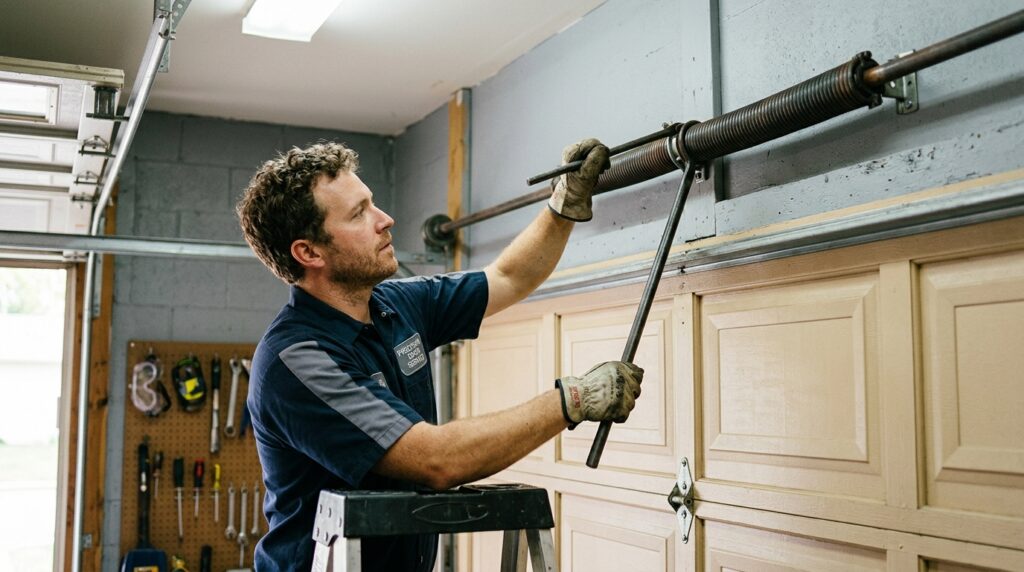
Small investments now often save significant money later. For Mint Hill homeowners who want to push the economics of repair further, Rise Up recommends a few preventative measures that are inexpensive but effective.
One is an annual tune-up. For under $100 in many cases, a technician will lubricate hardware, tighten fasteners, check springs and cables, clean and align sensors, and run a balance test. This simple service often prevents emergency calls and catches parts that will fail soon. Over a five-year period, annual tune-ups can reduce the number of major repairs and extend the life of the opener and springs by measurable amounts.
Another is to upgrade rollers to nylon instead of steel when replacing them. The added cost is modest, often $50 to $100 more for a set, yet nylon rollers run quieter, reduce wear on tracks, and can improve the lifespan of the opener.
Finally, consider adding a battery backup to the opener if you live in an area where power interruptions are common. The cost ranges, but the convenience and safety of being able to operate the door during an outage is a worthwhile trade-off for many homeowners.
A short checklist to decide whether to call a technician now
Door is unbalanced or hard to lift manually. Door reverses immediately after trying to close, or sensors are blocked. Loud grinding, squealing, or unusual noises during operation. Visible fraying on cables or rusted, broken springs. Remote or keypad stops responding despite fresh batteries.If you see any of these signs, calling a technician avoids escalation. Small problems left unattended often lead to broken springs, which require more time and higher cost to fix.
DIY fixes that make sense and those to avoid
Homeowners can safely handle a few inexpensive tasks that can resolve common annoyances. Changing remote batteries, cleaning and aligning sensors, tightening loose nuts and bolts that are clearly accessible, and applying a light lubricant to metal rollers or hinges are reasonable DIY jobs. These tasks are low risk and often restore quiet, smooth operation.
Avoid working on torsion or extension springs, replacing cables, or attempting extensive track realignment on your own. Those tasks carry a risk of severe injury and require specialized tools. If you are comfortable with tool use and want to do preparatory work for a technician to reduce labor time, photograph the problem, clear access, and write down symptoms and timeline. That will help the technician diagnose faster and potentially lower the final bill.
Why choosing a local company matters
A local company familiar with Mint Hill roofs, driveway grades, and home styles will often produce faster and more appropriate repairs than a national chain. Local technicians know the common issues caused by local conditions, such as seasonal humidity effects on wooden doors or the prevalence of certain opener models. Rise Up Garage Doors keeps service stock that reflects common local needs, which reduces the time and cost of waiting for parts.
Additionally, local companies tend to have a direct connection to local codes and inspection requirements. That familiarity is valuable when repairs trigger a permit need or when a Garage Door Repair near me homeowner wants documentation for resale.
A final word on value and expectations
Low-cost repair is not just about the dollar amount. click here It is a judgment about which repairs yield the most functional life per dollar spent while keeping safety non-negotiable. For Mint Hill homeowners, sensible, staged repairs from a company like Rise Up Garage Doors often restore convenience quickly, avoid unnecessary replacements, and provide transparent choices when replacement is the better long-term solution.
When you are deciding on a repair, ask for a written estimate, inquire about parts brands and warranties, and request that safety checks be documented. If the quote leans toward replacement, ask for a side-by-side cost and life expectancy comparison. That small effort will make it easier to choose the option that best fits your budget and the realities of your property.
If you want an initial, low-risk step, schedule a tune-up or inspection. It costs little, frequently prevents larger bills, and gives you a professional baseline for future decisions. For many people in Mint Hill, that single proactive appointment is the best way to keep the garage door functioning without turning maintenance into a recurring financial surprise.
Rise Up Garage Doors
Mint Hill, NC, United States
+1 (980) 240-2447
[email protected]
https://riseupgaragedoors.com/